

Teachers want to reach their students. But what happens when there is not enough time and conditions, and the child does not dare to tell them what is difficult?
In Novus's survey The future as a teacher 84 percent of teachers have great confidence in their own ability to reach students. At the same time, only 55 percent feel that they have the right conditions to succeed in their mission.
So it is not the teachers' will or competence that is lacking. But when the scope for action is limited, the risk increases that children's needs remain invisible.
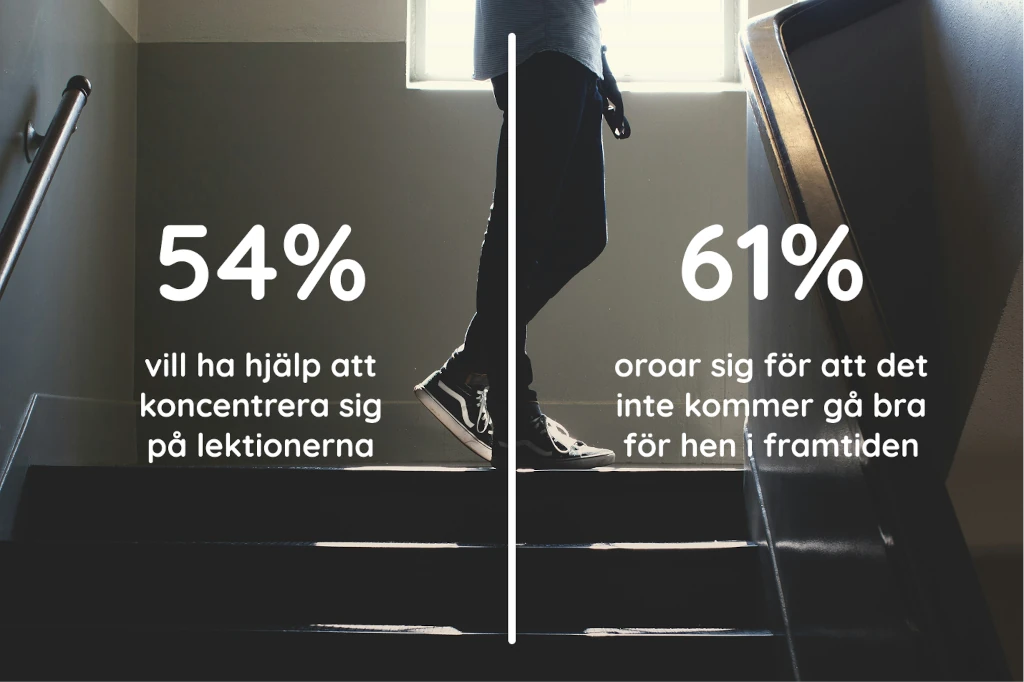
In the Ommej report 2026, 54 percent of children responded that they want help because they cannot concentrate on their lessons. 61 percent worry that the future will not go well.
At the same time, 21 percent respond that they never dare to speak up when they are not keeping up with the lessons.
That child may look calm. They may stay in their seat and make it through the school day without causing any disruption. But behind the silence, there may be difficulties that no adult has yet had the opportunity to understand.
The solution cannot be to place even more responsibility on the individual teacher. We need to make it easier for children to tell stories and give adults better opportunities to see the big picture.
In Ommej, the child is asked to describe their situation through questions about school, how they are feeling, relationships, and the rest of their life. The answers become a basis for the conversation and a better place to start.
This is what we are bringing with us to Ystad Summit on September 2, where Ommej's CEO Nicolina Fransson will participate together with NE and Novus.
The child's story should guide what we do.